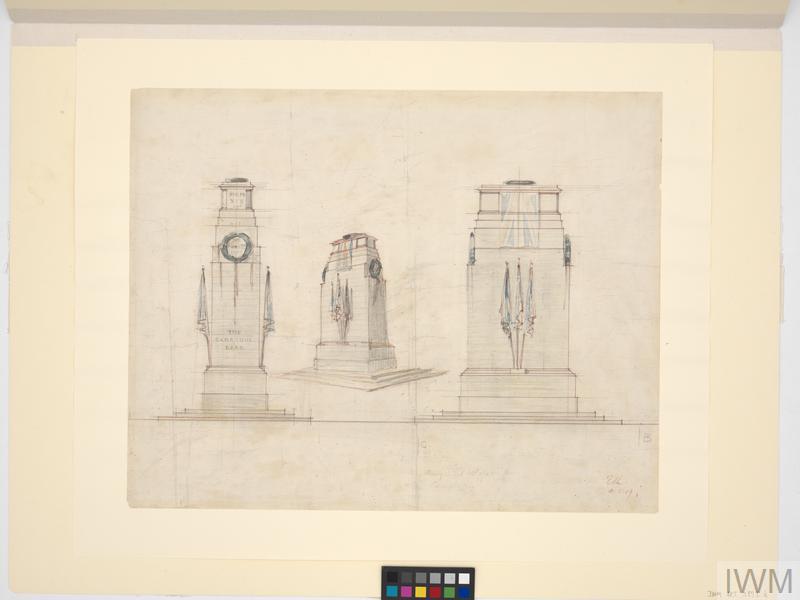
© Photo IWM (Art.IWM ART 3991 b)


Object Details
- Category
- Art
- Related period
- First World War (production), First World War (content), Interwar (content)
- Creator
- Lutyens, Edwin
- Production date
- 1919
- Materials
Support: paper
medium: Pencil
medium: ink
medium: wash
- Dimensions
Support: Height 376 mm., Width 473 mm.
Mount: Height 509 mm., Width 685 mm.
- Catalogue number
- Art.IWM ART 3991 b
Object associations
-
Associated events
-
Associated keywords
-
Associated themes
Our collections information
We have over a million object records online, and we are adding to this all the time. Our records are never finished. Sometimes we discover new information that changes what we know about an object, such as who made it or used it. Sometimes we change how an object is interpreted. We sometimes make mistakes in our spelling, transcription or categorisation, or miss information out of our records.
Read more about our collections and the information we hold. Developing our collections information
If you have concerns about the language in this record, or you have information to improve it, please share your feedback.